From October, cooling demand typically begins to ease, although many commercial systems continue running extensively. The pressure that kept HVAC issues visible through summer eases with it. Systems that were struggling under peak load begin holding setpoint again; complaints drop, and the condition that caused them stops being obvious. Q4 […]
Envida
How Humidity Imbalance Drives Mold Recurrence in UAE Commercial Buildings
A building can hold indoor relative humidity within the recommended range, pass its air quality assessment, and still accumulate moisture inside its wall assemblies continuously through the cooling season. When mold returns after remediation in these buildings, the indoor humidity reading is rarely the reason. The differential across the envelope […]
Hidden Mold in Commercial HVAC Systems: Why Concealed Contamination Goes Undetected
A commercial building can hold an active mold reservoir inside its air handling equipment while producing a clean inspection record, a passing air quality report, and a complete maintenance log. The contamination is not missed through negligence. It is missed because the standard detection regime is not pointed at the […]
Snapshot Inspections vs Continuous Monitoring: Why One Fails in Humid Climates
Most UAE commercial buildings manage air quality through periodic indoor air quality testing. A technician attends, records conditions across defined zones, and issues a report. For parameters such as particulate concentration or VOC levels, that method works. For humidity, and therefore for mold risk, it has a structural limitation that […]
Data Center Contamination Control Before Q4 Load Increases
Most enterprise data centres see compute load rise through the final quarter, driven by financial year-end processing, retail and logistics peaks, and deferred project work landing before December. Many of the same organisations operate a Q4 change freeze, which closes the window for non-critical facility works several weeks before the […]
Mold Risk Assessment for Commercial Buildings: What a Proper Investigation Actually Covers
Most mold investigations in commercial buildings begin at the wrong point. Someone reports visible growth or an odour, a contractor attends, and a remediation quote is issued against the affected area. The scope is set by what was visible on the day, and the moisture mechanism that produced it is […]
End-of-Summer AC Duct Inspection: What Six Months of Peak Cooling Load Does to Ductwork
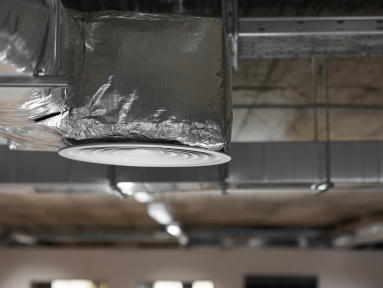
By the end of August, a commercial HVAC system in the UAE has run at or near full load for roughly six months. In that period, it has moved a large volume of air across coils, through filters, and along ductwork, while operating in an external environment with high ambient […]
Why Mold Returns After Summer: Humidity, HVAC Design, and Root Cause
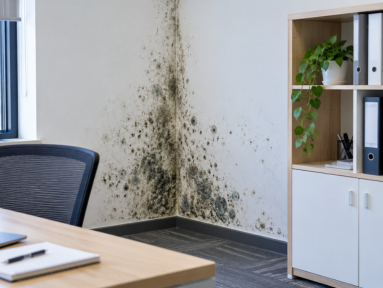
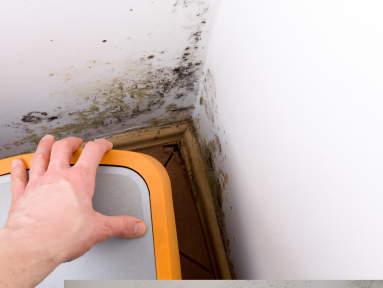
Mold enquiries across UAE commercial properties rise sharply at the end of the cooling season, and in many of those cases the affected area was treated within the previous twelve months. The visible growth was removed, the surface was cleaned, and it returned to the same location or an adjacent […]
The Air Quality Risk Most Data Centres in Dubai Are Not Inspecting
Data centre managers monitor server temperatures, network latency, power consumption, and rack utilisation in real time. The precision cooling infrastructure feeding those racks, including AHUs, supply ductwork, and precision cooling units, is frequently maintained but rarely audited for air quality or particulate contamination. The two activities are not the same thing. ASHRAE Technical Committee 9.9, which sets environmental guidelines for mission-critical facilities, […]
What Your AC Maintenance Contract Does Not Cover, and Why Facility Managers in Dubai Miss It
Most commercial buildings in Dubai operate under an active AC maintenance contract. Filters are replaced on schedule, coils are cleaned, units are serviced, and the paperwork confirms compliance. What that contract rarely includes is the ductwork that connects those serviced units to every occupied space in the building. The distinction matters because […]